

NIPPLE PIERCING CARE INSTRUCTIONS

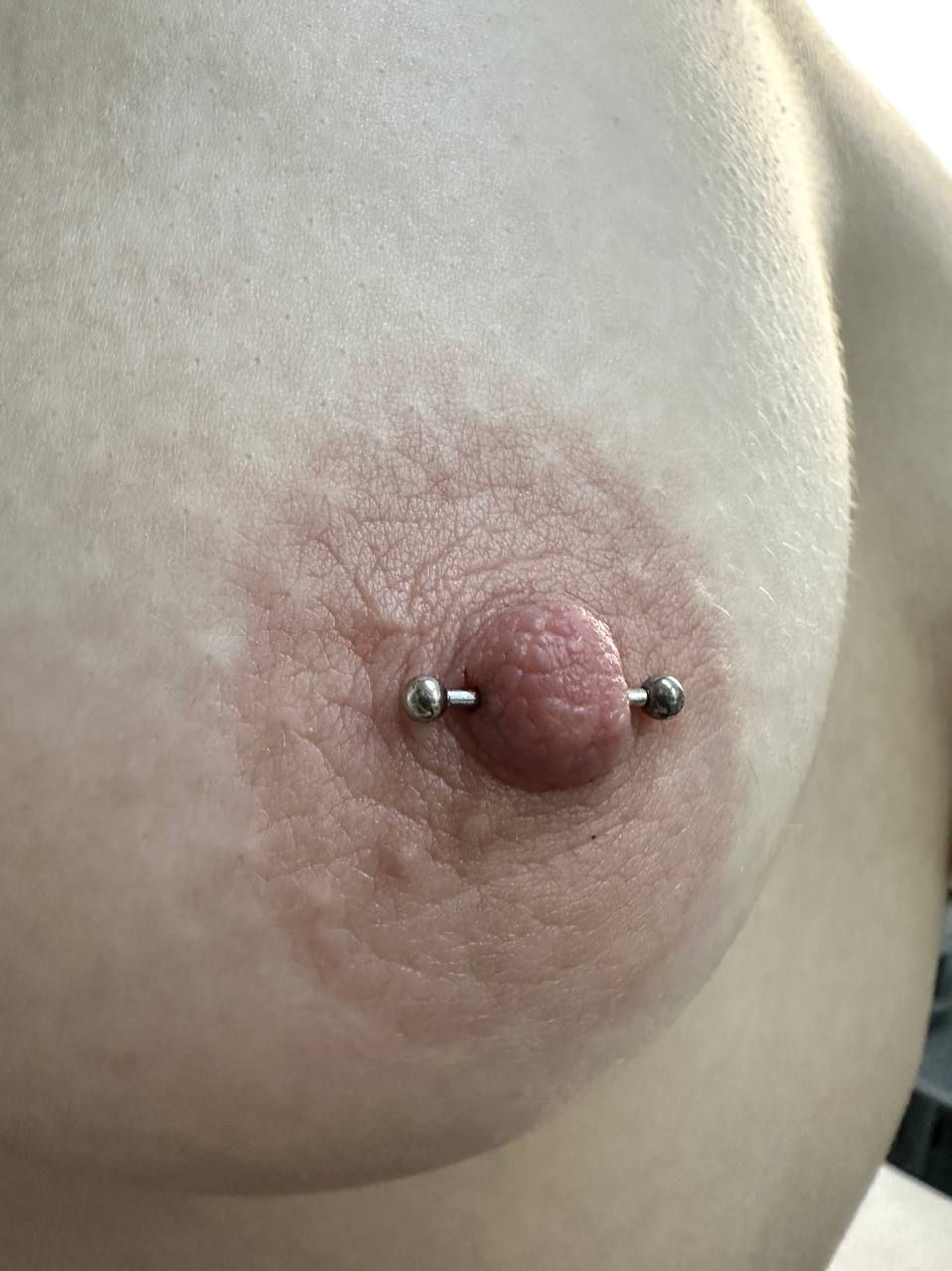


What to do after your piercing Every piercing creates a small wound. For comfortable healing, remember two things: 1. Let your body recover without unnecessary interference. 2. Keep the piercing clean. Ignoring these simple rules can lead to irritation, inflammation, or other avoidable problems. For aftercare you will need sterile saline solution, Octenisept, and, if necessary, a hypoallergenic dressing with an absorbent pad. All are available at a pharmacy. How to care for your piercing **Saline solution** Pour a little solution into a clean container and apply a generous saline-soaked gauze compress for a few minutes. Gently remove any softened discharge or crust without moving the jewelry unnecessarily. The aim is to clean the area gently without injuring the skin. Afterward, rinse off the saline with clean water and pat the area dry using a disposable tissue. **Octenisept** Moisten a cotton pad or gauze and gently apply it to both sides of the piercing for one to two minutes. Use this if the piercing was exposed to dust or dirt or you accidentally touched it with your hands. **IMPORTANT:** Once the initial swelling has completely gone down and the jewelry becomes noticeably longer, contact your piercer. They will examine the piercing and, if necessary, replace the jewelry with a more suitable length. Aftercare timeline First 30 days - Rinse the piercing with saline morning and evening so discharge does not build up around the jewelry. - If dust or dirt reaches the piercing, you may additionally clean it with Octenisept. - Make sure clothing does not press against or catch the jewelry. - If clothing rubs against the fresh piercing, you may temporarily protect it with a clean dressing with an absorbent pad. - Keep clothing, towels, and bed linen clean. - Avoid creams, oils, sprays, and other cosmetic products on the piercing.
Next steps Days 30 to 60 By this stage, the piercing will usually feel calmer and less uncomfortable, but it is not necessarily fully healed. Continue keeping it clean, and make sure the jewelry does not catch on clothing or remain under constant pressure. If swelling has subsided and the jewelry is now too long, moves around excessively, or catches on clothing, contact your piercer. They can examine the piercing and recommend a more suitable size if needed. After day 60 A piercing may look completely settled on the outside while the internal channel is still forming over the following months. Even mild but repeated trauma from clothing pressure, snagging, or changing the jewelry yourself can trigger irritation and sensitivity again. Do not change the jewelry yourself while healing is still in progress. If you want different jewelry or are unsure about the size, visit your piercer for a check and professional change. Even after the piercing stops bothering you, continue normal hygiene and occasionally check that the jewelry is not pressing against the skin or snagging. What to avoid after piercing Good healing involves not only proper aftercare but also avoiding repeated trauma to the piercing. 1. Do not touch or rotate the jewelry Avoid pulling, twisting, or removing jewelry unnecessarily. The less a fresh piercing is disturbed, the more smoothly it can heal. 2. Avoid pressure and friction Avoid pressure on the area and clothing that constantly catches on the jewelry. Try not to put significant pressure on a fresh piercing while sleeping. Some people prefer a soft cotton top or sports bra to protect the jewelry from accidental snagging. 3. Do not use alcohol, hydrogen peroxide, or home remedies Avoid additional products not included in your aftercare guidance. Alcohol, hydrogen peroxide, and harsh solutions can irritate a new piercing and interfere with normal healing. 4. Keep cosmetics away Creams, oils, lotions, perfume, and other cosmetics should not come into direct contact with a fresh piercing. 5. Limit smoking and alcohol It is best to reduce alcohol consumption and smoking during active healing. Avoiding alcohol during the first few days is especially important. 6. Avoid saunas, pools, and open water For the first month, avoid saunas, steam baths, swimming pools, and immersing a fresh piercing in the sea or other open water. If contact with water is unavoidable, an appropriate waterproof dressing may help protect the area. 7. Do not self-treat If the piercing becomes very irritated, the jewelry presses or repeatedly catches, or other unusual changes occur, contact your piercer. They can help assess the piercing and decide whether aftercare or jewelry size needs to be adjusted.
Frequently asked questions 1. Does it hurt? The piercing itself takes only a few seconds. Everyone experiences pain differently, and sensitivity varies. 2. Should I rotate the jewelry? No. There is no need to rotate the jewelry. Unnecessary movement can injure the fresh channel and increase irritation. Disturbing the jewelry as little as possible helps healing progress smoothly. 3. When should the initial jewelry be downsized? Once the initial swelling has completely subsided and the jewelry becomes noticeably longer, arrange a check with your piercer. Do not rely only on a fixed number of weeks. Your piercer will assess whether a change is necessary and which size is appropriate. 4. How long may the piercing remain sensitive? Mild sensitivity and swelling are normal during the first few days. They should gradually subside. Nipple piercings heal over time, so the area may occasionally become sensitive again after pressure, friction, or accidental snagging. 5. When can I wear my own jewelry? Do not rush to change the jewelry. The piercing may look healed on the outside long before the internal channel has fully formed. If you want different jewelry, show the piercing to your piercer and have them perform the first change. 6. Should I keep the piercing covered with a dressing? No. It does not need to be covered constantly. A dressing can be used temporarily to protect a fresh piercing from rubbing or snagging on clothing. Otherwise, focus on cleanliness, avoiding pressure, and preventing trauma.